A collaborative project by Ismail Farouk and Daniel Lima, which also forms part of my doctoral project in Visual Performing Arts at Durban University of Technology.

The work ‘The Eaters:: Comedores / The Eaten :: Comidos’ was realised for a group exhibition and cultural exchange project called Conversations in Gondwana which culminated in an exhibition hosted at the Centre for Contemporary Culture São Paulo (CCSP), in Brazil, in 2019. The work allowed for a conversation across histories and geographies, personal experiences and memories, on the central role of food, of eating and food politics. Both Lima and myself were able to reflect upon the recipes, foods, food memories and landscapes, stories and identities that revolve around our own identities and backgrounds. Both coming from Natal – one in South Africa and one in Brazil – our mothers’ recipes tell stories of indenture, enslavement, genocide, apartheid, resistance, creativity, adaptation and survival. The foods we eat, the recipes we treasure, are not neutral, nor are they just about nourishment or taste/flavour. They are personal, they are political. The recipes we discussed, the politics of food economies, recipes, diets, ailments, structural neglect, cultural appropriation – are highly politicized, contested and imbricated in colonial structures and colonial desire.
In this work, we think about the role of food, eating and the production of racialized, gendered bodies, erased pasts and foreclosed futures. Eating as a trope of coloniality, imbricating desire, appropriation and violence that both creates and mediates subjects and polices boundaries of subjectivities and imaginaries. A colonial palate/mouth that consumes lands, cultures, histories, languages, bodies, cries and resistances. Drawing on radical black feminist genealogies, we like to think about a kind of forced-feeding of colonial modernity, and the regulatory and revelatory nature of the regimes of care, taste, circulation, ingestion and control surrounding contemporary culinary cultures and food landscapes.
As transdisciplinary artists who have an ongoing body of research and conversations we have carried out around issues of spatial violence, the intersections of race, space, land and the policing/regimenting of spatialities and bodies, this particular work carried on this trajectory of research. Looking primarily into the arenas of food and eating, colonial histories and contemporary neoliberal violence, this work is the result of an ongoing body of work, research and conversations between Daniel Lima and myself.
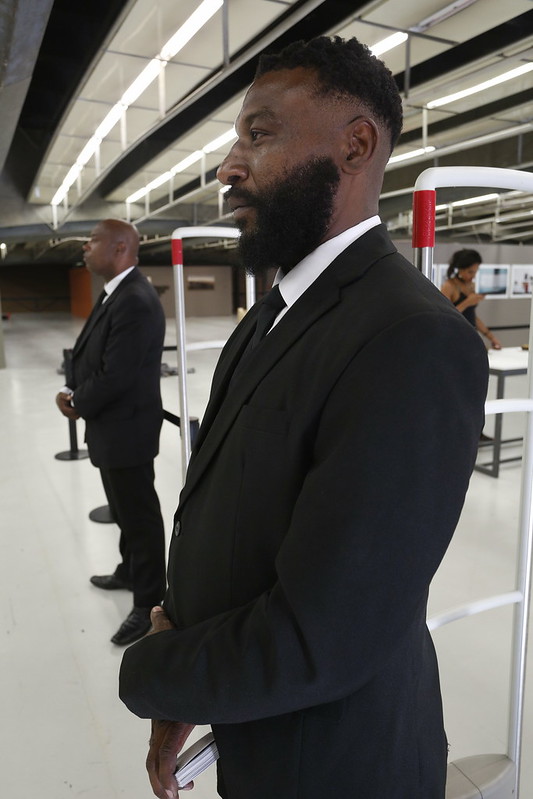
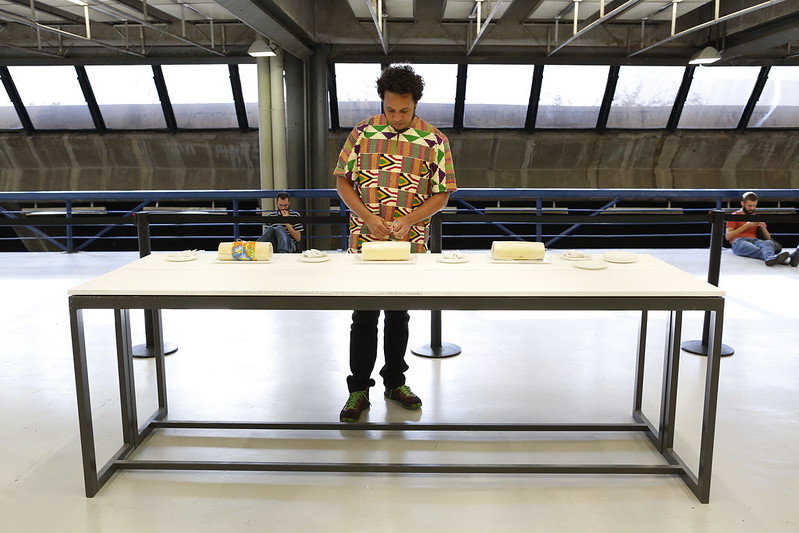
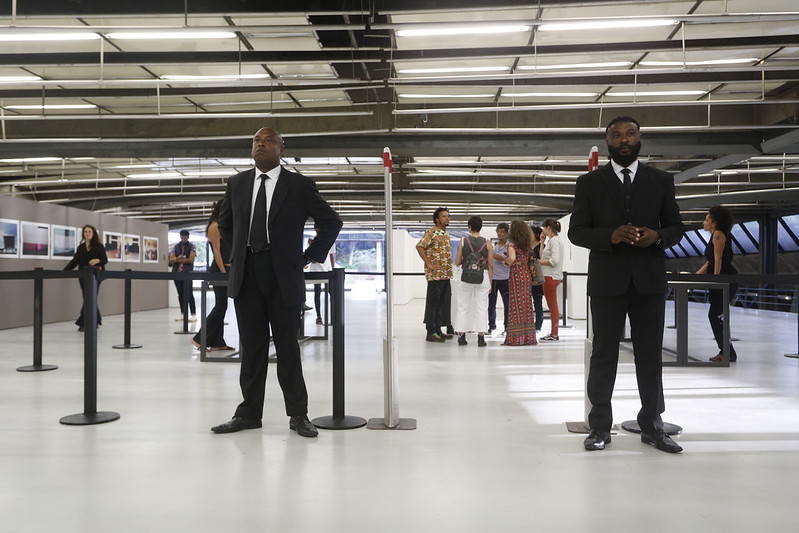
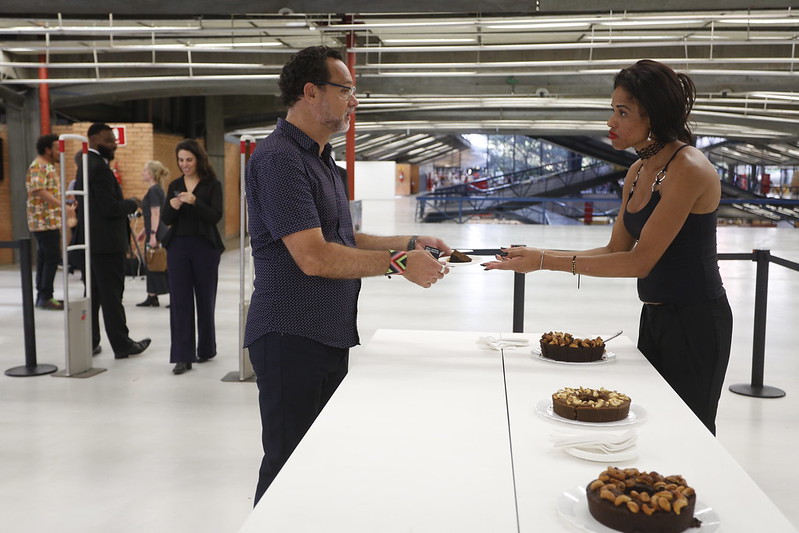
Our work was centred around the presentation, serving and spatial arrangement/engagement around two iconic popular Brazilian cakes. We served the cakes in a controlled, securitized environment set in the midst of the white walls and clean lines of the gallery space. We hired actors to perform the role of security guards and to hand out black or white cards to visitors. If you were handed a black card, you were served a slice of Pé de Moleque (black cake). If you were handed a white card you were served a slice of Bolo de Rolo (white cake). We did not tell the security guards who to give a black or white card to and left it entirely up to their discretion.
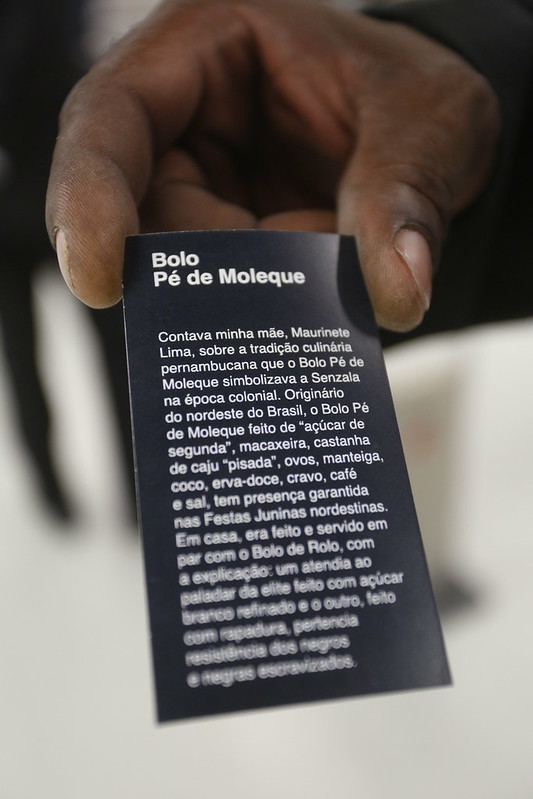
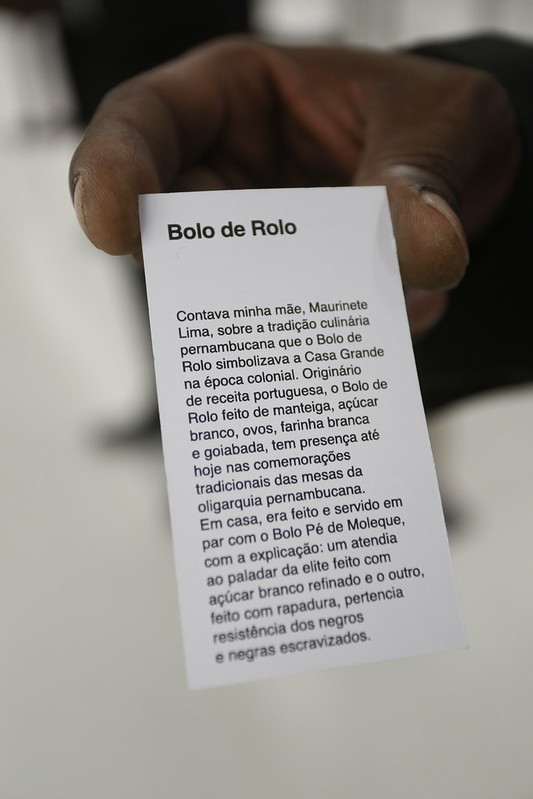
The English translation of the text on the black and white cards reads as follows:
My mother, Maurinete Lima, told me about Pernambuco’s culinary tradition that the Pé de Moleque cake symbolized the Senzala in colonial times. Originating in the northeast of Brazil, the Pé de Moleque cake made of “second-class sugar”, manioc, cashews “pisada”, eggs, butter, coconut, fennel, cloves, coffee and salt, is guaranteed to be present at festivals in the north-eastern regions. The name carries different possible origins, from “asking” for the cake to the appearance of bare feet. At home, it was made and served alongside the Bolo de Rolo, with the explanation: one served the taste of the elite made with refined white sugar and the other, made with brown sugar, belonged to the resistance of black and enslaved people” (Translation by Daniel Lima, 2019).
Exploring oral histories related to these popular desserts, the bodies and regimes of labour, servitude, and care associated with these foods, we present ways in which racialised bodies intersect and are created by relations to land, food, power, all mediated by and through multiple forms of violence. The recipes for these cakes originate from Daniel Lima’s mother, Maurinete Lima. In this way, we also wanted to bring in the gendered nature of food, of culinary knowledge and foodways, that historically through the violence of colonialism and slavery, relied upon gendered and racialised forms of labour. By focusing our work on Maurinete’s recipes, her memory and her food/recipes, we implicitly honour and centre her agency, creativity and knowledge. We centre her presence in the gallery through the cakes, the security guards, the cards, people’s mouths and guts. Maurinete and the histories and resistance that these recipes speak to, in this way is the spirit and ancestor who is carried through in this work. Her own commentary on ingredients, tastes and the many stories around the origins of the black cake, are centred here as archive and knowledge source.
Rather than replicating her recipes, a treasured family heirloom and ancestral archive, we asked various pastry chefs around São Paulo for their takes on the recipes, looking into not only taste and presentation but also ingredients, modes of production, and beyond. We gave them license to make their own creations, with her ancestral recipe as the frame and guiding light.
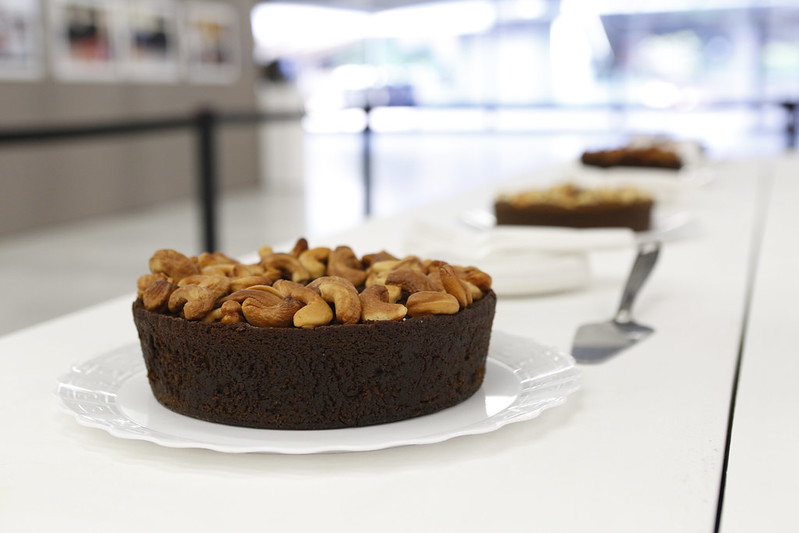

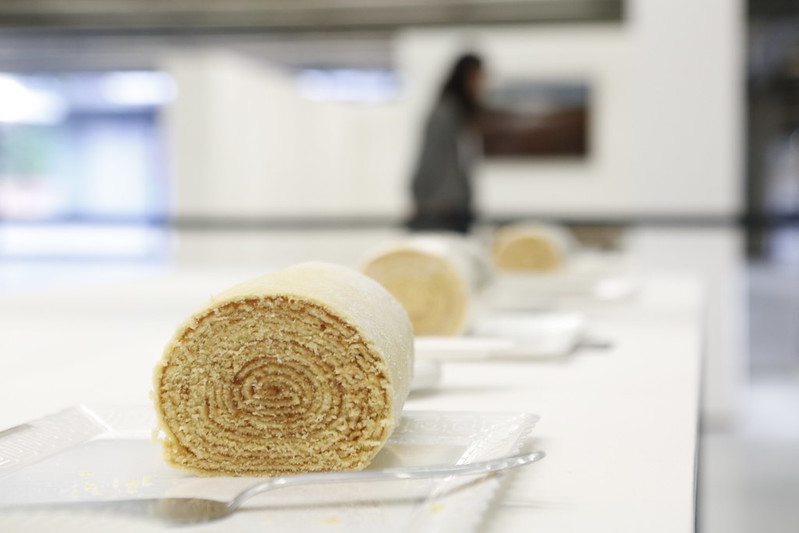
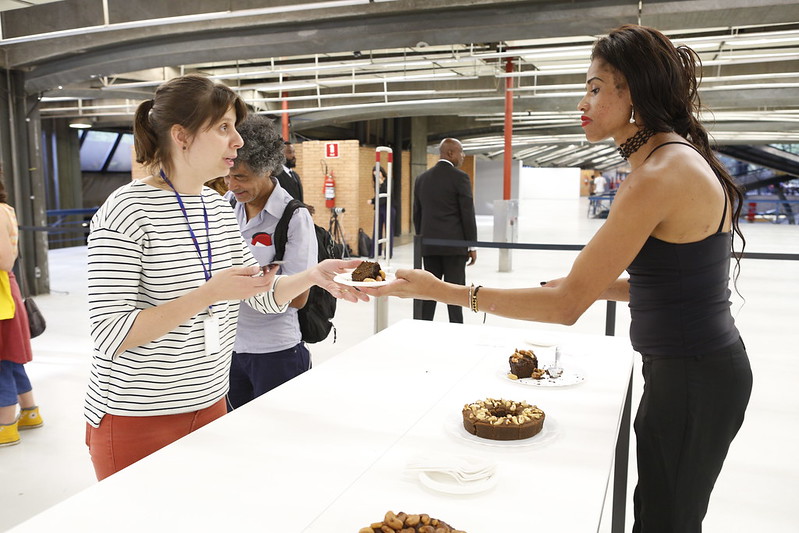
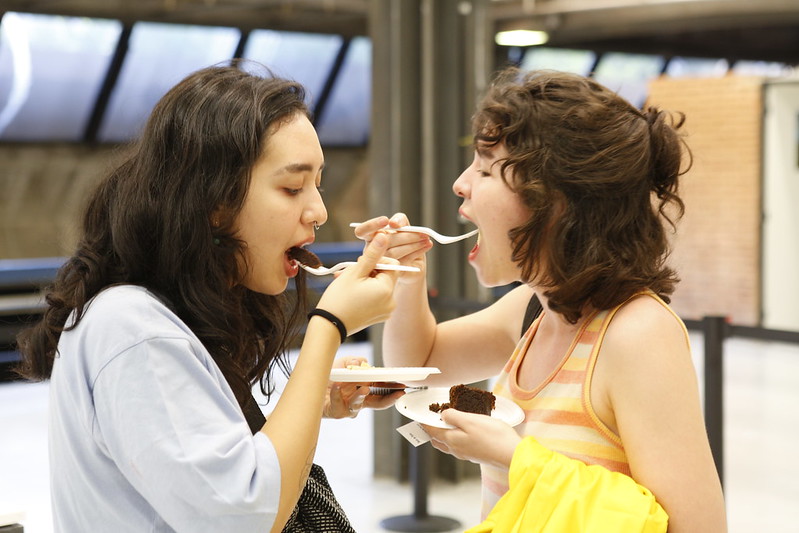
Photographs by Lucas Barreto, Official Documentation, CCSP, 2019.
Our aim was to interrogate the way in which racialised bodies, foods and foodscapes, colonial histories, and histories of slavery, shape the contours of not only the foods we eat, but also the foods we desire and detest, the ingredients and seeds that are criminalized, worshipped, genetically modified, gentrified. This messy imbrication of cake, mouth, gut, digestion, taste, gallery, allowed for a temporal pause to open space for the everyday and banal archive of food to emerge as agent, as edible and eaten element for considering the politics of food and how we might interrogate, intervene, reflect on the centrality of food to our lives beyond mere nourishment or fuel.
In this work we also bring in bell hooks’ work on eating the other, as well as Grada Kilomba’s forced feedings of modernity, to consider how racialisation forms part of this complex layering of dispossession, genocide, silencing and erasure, as well as resistance and creativity through every day and invisible archives. Besides foods, the knowledges and recipes involved in food preparation are profoundly tied to plantation economies and invisible black femme and black womxn’s labour, brilliance, survival and resilience. The aim of the work was an intervention in the realm of food-based live art, interrogating power, ongoing social injustice, as well as practices of care and resistance related to food, memory, cooking and eating, that draw upon long histories of resistance against colonialism. Although our references are only very subtly discernable in the performance, our aim was to open space for discomfort, for considering entanglement, for rendering the mundane a space of inquiry, of experimentation, destabilization and query.
The highly regimented movement of people in the gallery, and their access to and consumption of the delicious and highly symbolic cakes so important in Brazilian culture, mimic and trace the highly controlled nature of bodies both racialised, gendered, taxonomized, and people’s access to food both within plantation economies, mass dispossession and genocide, as well as in ongoing ways in prisons. The way in which the prison-industrial complex and plantation and indenture economies haunt our present is the unspoken thread in this work. We wanted to explore how people would move, eat, act and feel in such an uncomfortable space, with food so far removed from joy, from celebration of the festival context in which the cakes might normally be consumed. How does such a displacement, or juxtaposition impact affect, experience? The many questions that emerged and intersections between our contexts of Brazil and South Africa was a large part of what allowed me to complete my dissertation and the body of work that accompanied my doctoral project.