
This article was originally published in the African Cities Reader I. A creation of Chimurenga and the African Centre for Cities: https://chimurengachronic.co.za/wp-content/uploads/2022/07/African-Cities-Reader-I-Online-high-res.pdf
By Ismail Farouk
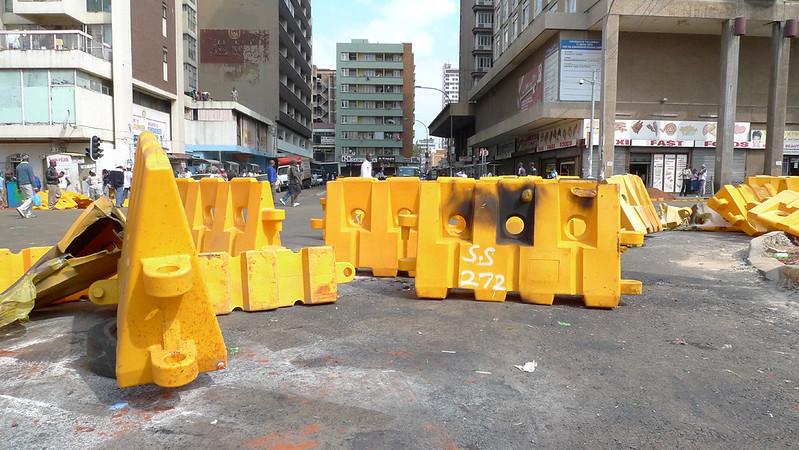
Joubert Park presents a particular context of the Johannesburg inner city in decline. situated centrally in the downtown area, Joubert Park boasts two large taxi interchanges and a tightly locked street grid pattern, which has resulted in extremely high densities of mini-bus taxi traffic on the road
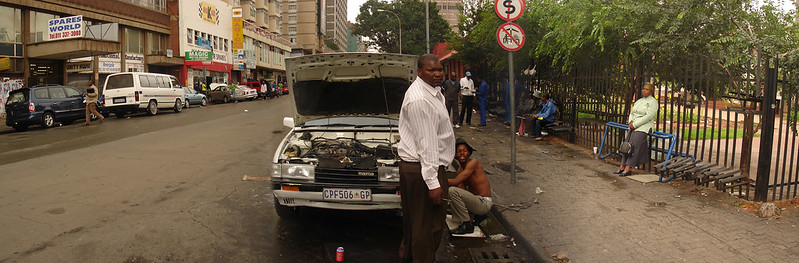
All the economic activity in the area is orientated towards the taxi industry. There are a large number of motor spares shops specialising in cheap taxi spares and a diverse range of informal motor-related services, offered predominantly by Mozambican motor mechanics. specialised services ranging from window tinting to auto-electrical work are all carried out on the sidewalks in direct contravention of the city by-laws.
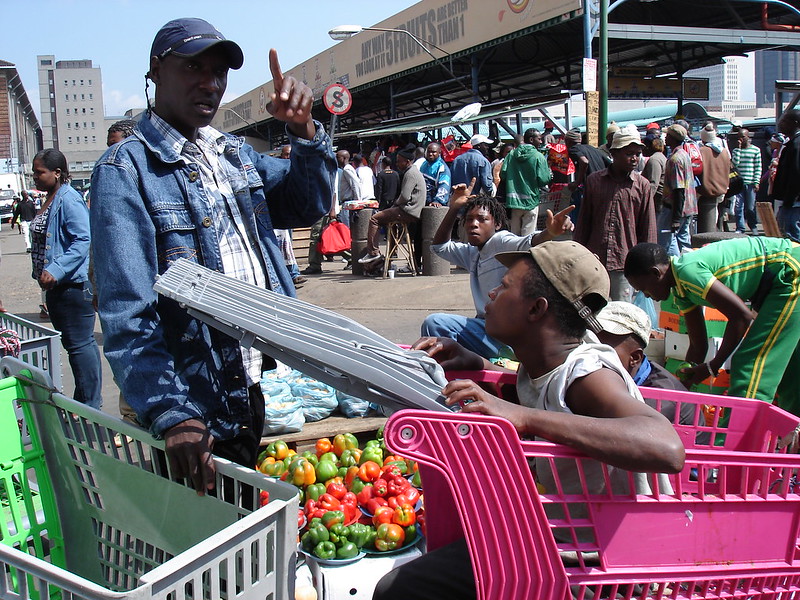
Lately, Zulu women have been cooking traditional Mozambican food on the street corners to cater for the large numbers of Mozambican mechanics working in the area. At every intersection men approach the taxi drivers selling cigarettes and sweets. Outside the taxi ranks, groups of Zimbabwean and Mozambican luggage porters (trolley pushers) wait for customers requiring baggage carrying assistance.
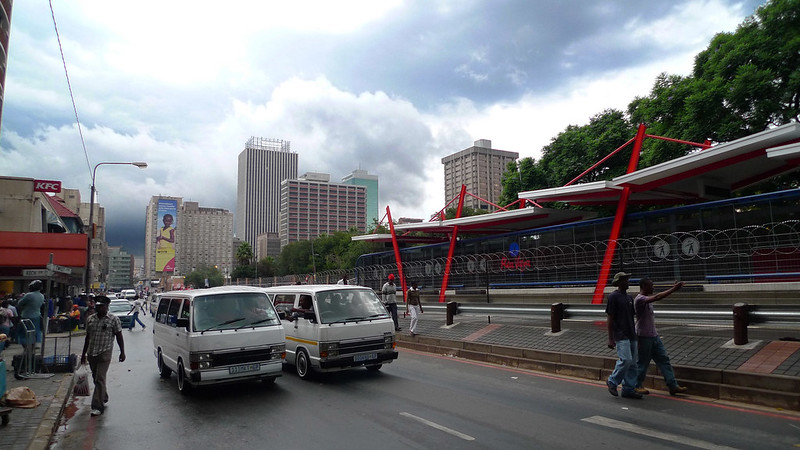
The city is faced with the challenge of integrating the taxi industry and its associated economic activities as part of its wider development objectives. Its strategy thus far has been to develop new infrastructure – Central to Joburg’s plan for easing much of the taxi traffic congestion has been the introduction of a new BRT (bus rapid transit system). The pilot BRT project is located in Joubert Park, where local taxi associations have been protesting, as they fear the BRT will result in increased competition for customers and space.
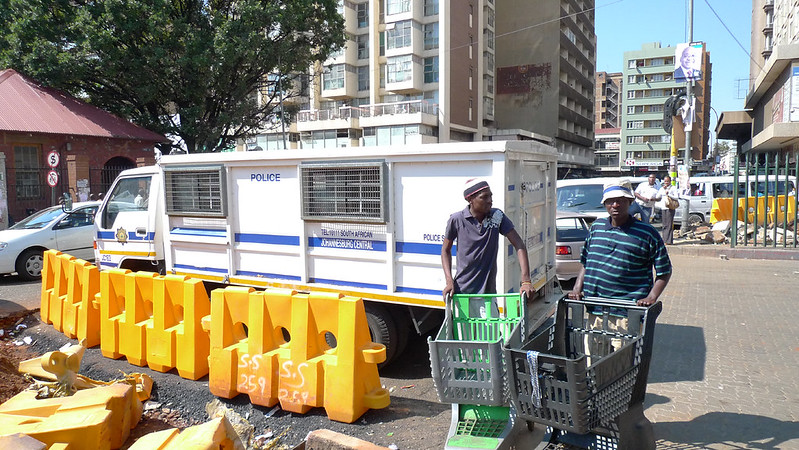
The introduction of new infrastructure is in keeping with local government’s agenda to support the process of transformation in the inner city. Whilst it is acknowledged that new infrastructure is required by the city, the process thus far has been geared towards generic plans, which support the gentrification of the city. There seems to be a single minded focus on physical infrastructure upgrades and a lack of institutional support for local organisations. The city regeneration plans also criminlise migrants and the informal sector, who are not considered part of the desire for the future in the re-imagining of the city
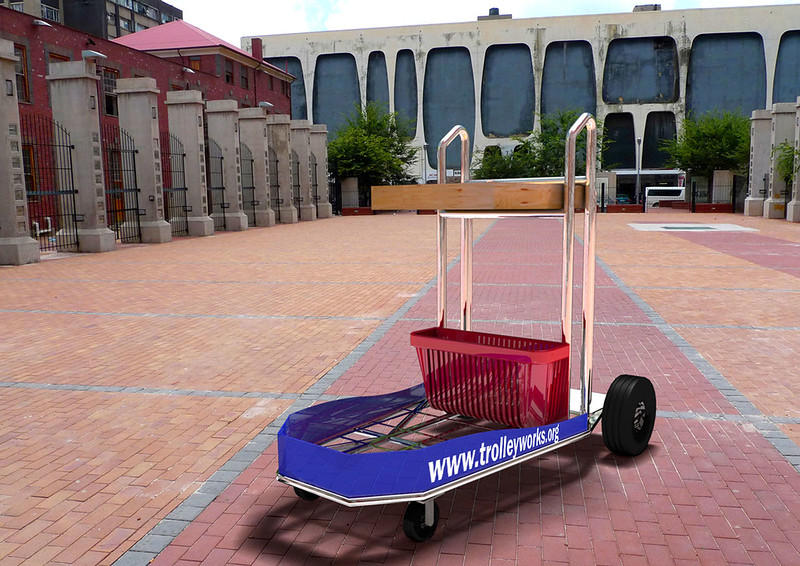
Trolley Works is an innovative artist-led project exploring the potential for the arts to complete a community asset mapping project in Joubert Park. The objectives of the Trolley Works project are to develop a comprehensive profile of the informal trolley pushers and related economic activities in the greater Joubert Park area. By mapping the informal economic activities and the organically generated diversity, the project aims to bring about awareness to the potential role of migrant controlled business as contributing towards the economic and cultural regeneration of the inner-city of Johannesburg.

The Trolley Works project was initiated with the primary aim to provide trolley pushers with a legal trolley alternative to the stolen shopping carts currently being used on the streets. A major problem associated with trolley pushing activity has been victimization by the police. Every time a raid occurs, trolley pushers are fined R300 and their trolleys are confiscated. Lately, raids have been occurring with increasing frequency and trolley pushers are being detained in prison for a seemingly harmless economic activity.
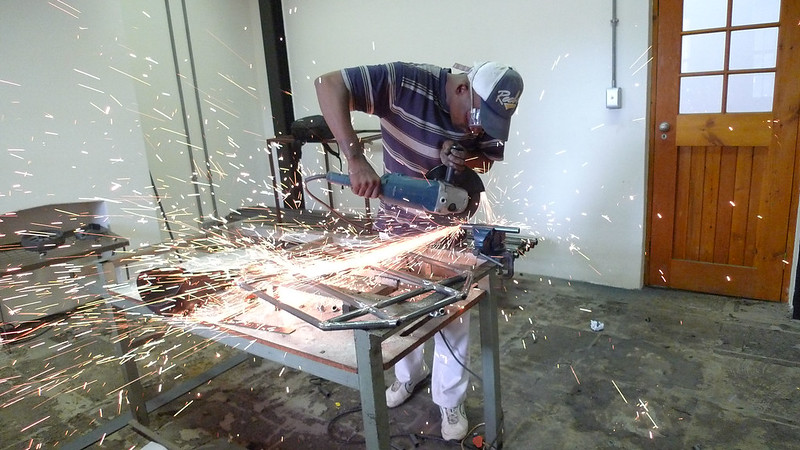
In total four custom built trolleys are being developed as part of an active experiment on Johannesburg roads. In addition to designing custom built trolleys for the legalization of the activity, the project also seeks to develop trolley pusher led guided tours of the downtown area. The guided tours are seen as a practical strategy to sustain the project as well as a means to address the need to walk in the downtown area of Johannesburg. Walking in Johannesburg is strongly linked to class, race, crime, fear and paranoia. The proposed tours attempt to address these challenges, whilst getting people thinking and contributing to a conversation related to the politics of public space in the city.
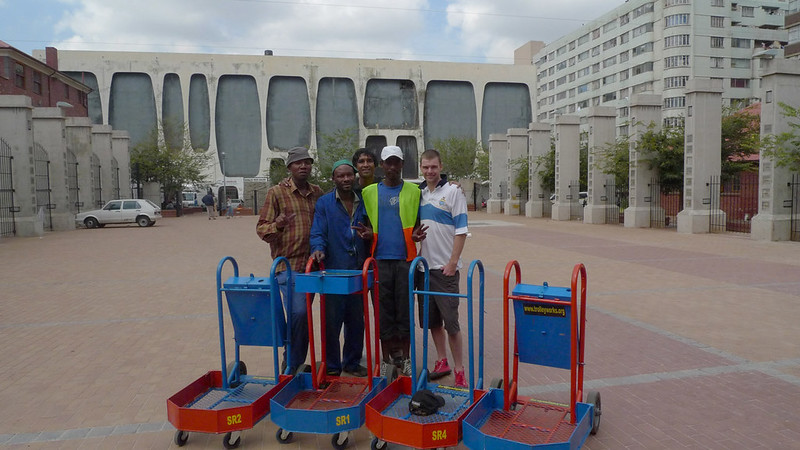
Four trolley pushers from the Joubert Park area have been identified to work as tour guides and as field researchers. The research team is currently conducting interviews and surveys aimed at providing demographic information about the trolley pushers in the area. In addition, they are also carrying out daily mapping exercises concentrating on spatially locating the various informal economic activities in public space.
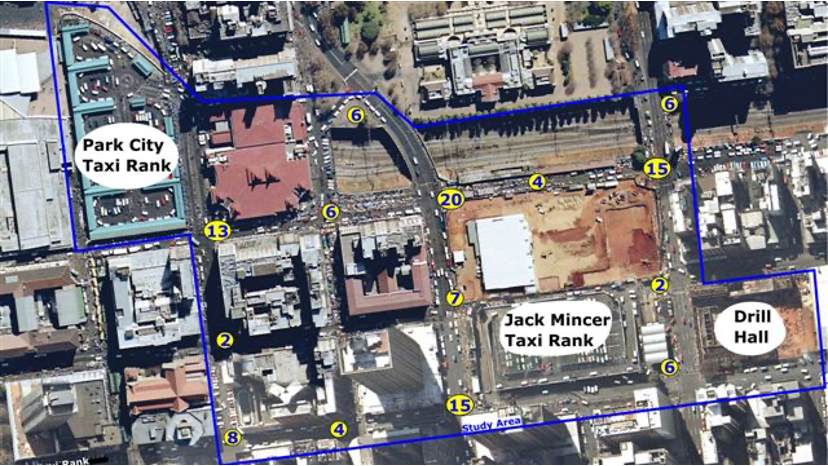
On the morning of the 3rd of February 2009, our research team counted 104 trolley pushers in the Joubert Park area. Our study shows that 50% of trolley pushers were of Zimbabwean origin, 40% of Mozambican origin, whilst South African trolley pushers made up only 10% of the total number of trolley pushers. Trolley pusher groups occupy almost every corner of Joubert Park. The groups prefer waiting at known taxi stops, where they are likely to find customers requiring baggage assistance. There are approximately 20 trolley pusher groups operating within a 10 block radius in Joubert Park. Group sizes vary from as little as 2 members to as many as 20 members per group. The groups are formed through informal social agreements where routes of operation are agreed upon. Theoretically, anybody can become a trolley pusher, however the activity is exclusively male dominated.
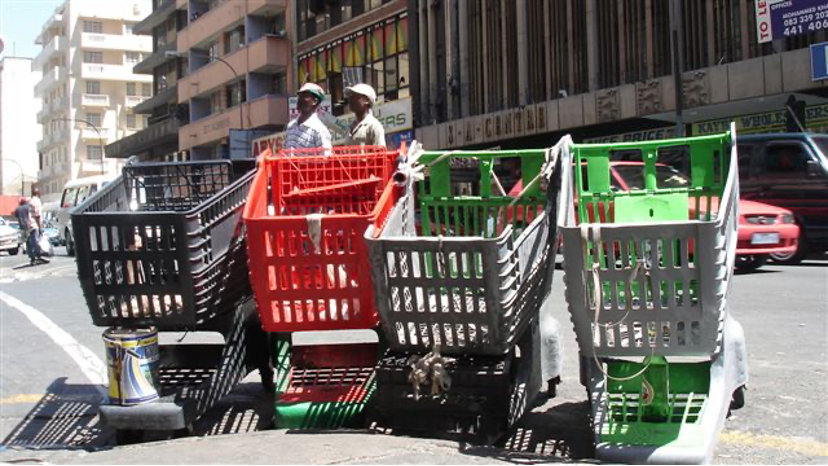
Theft of supermarket trolleys is a highly organised business. The trolleys are supplied by gangs made up of Zimbabwean youth, who utilise hired trucks and vans to transport stolen trolleys from shopping centers to the downtown area where they are sold on the streets. The trolley pushers are not directly responsible for the theft of trolleys. However, everyone is aware of the pick up points for stolen trolleys in the area. During quiet periods, stolen trolleys are sold for as little as R50, whilst trolleys can sell for as much as R200 during busy periods. The response from supermarket chain stores has been to setup a special task force for recovering stolen trolleys off the streets. Weekly raids ensure that all the visible trolleys in the area are confiscated. Subsequently, the trolley pushers have devised a system, whereby trolleys are locked to immovable property on the sidewalk. During raids trolleys are also moved off the streets and are parked into the basement spaces of high rise buildings.
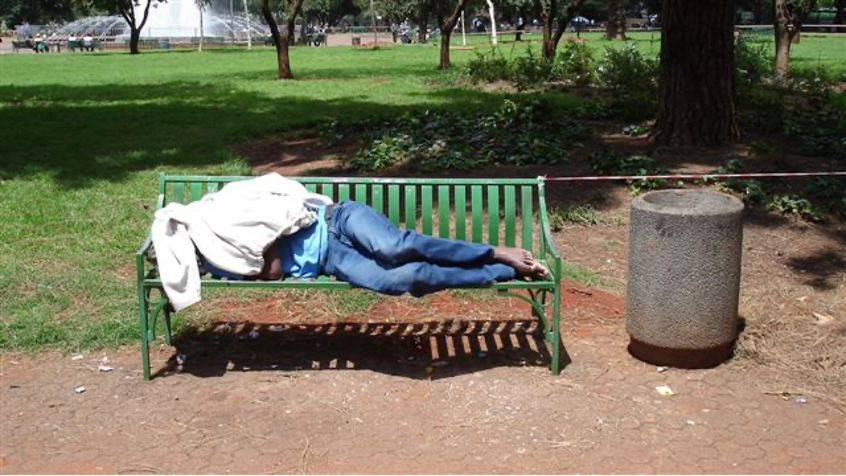
Increasingly, trolley pushers find themselves without any housing, and some can be found sleeping on the sidewalks during the day. Most turn to substance abuse as a means to escape the realities of poverty. The trolley pushers of Joubert Park need access to basic services. They need counseling, access to health care, better nutrition, stable housing and a more secure means of income. There are no city run programs aimed at young adults in Joubert Park. Whilst most non-profit service providers in the area are struggling with issues of sustainability and are generally stretched to capacity. Respite occasionally comes from faith based organisations through weekly feeding schemes.
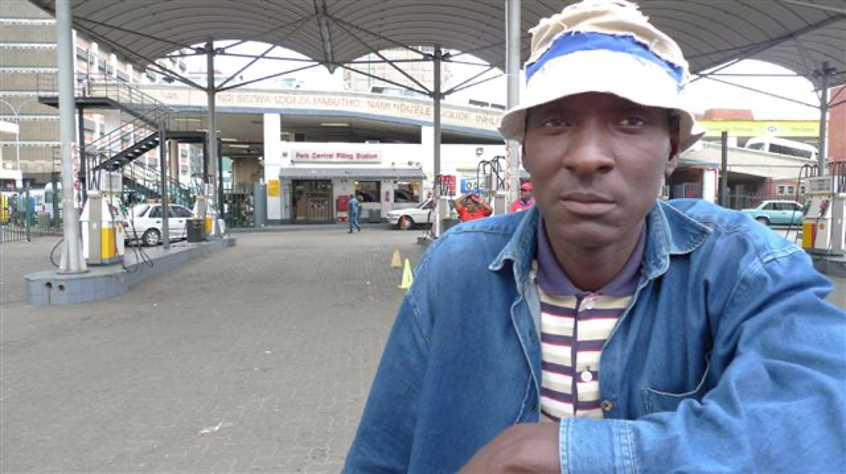
Standing outside Park Central Filling Station in Joubert Park, trolley pusher Hansa Monsaka, complains bitterly about his ability to earn money. Besides paying the Metro Police fines every time he is caught with a stolen trolley, Monsaka needs to pay rental for his room. He is also expected to send his son to school in Johannesburg, as well as send money back home to Zimbabwe.
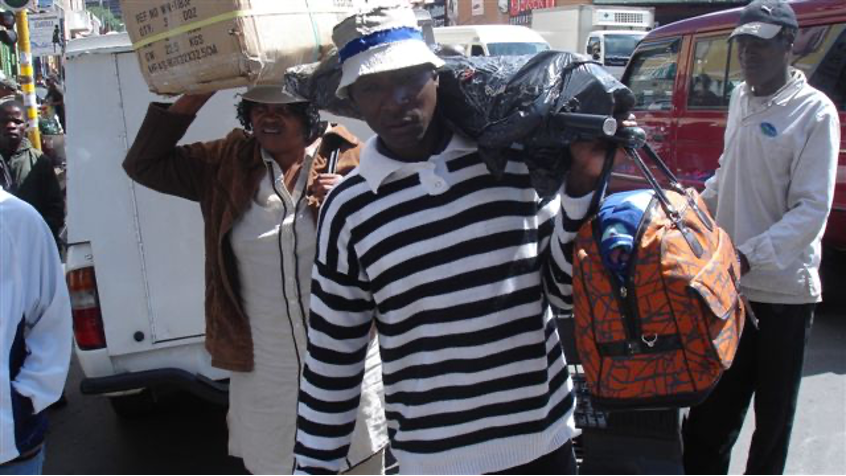
During the month of January, Monsaka struggled to earn as little as R50 per day as things were slow on the streets. Business in February seems to be none better. The increasing numbers of trolley pushers on the streets in not helping the situation as competition is leading to conflict. The criminalization of the activity seems to be making an impact on the numbers of trolley pushers operating on the street during the week. The Police are known to come around on Friday morning raids which often results in weekend detention. Keen to continue their work on busy Friday mornings, the trolley pushers have resorted to carrying people’s luggage on their shoulders as a strategy to avoid arrest.
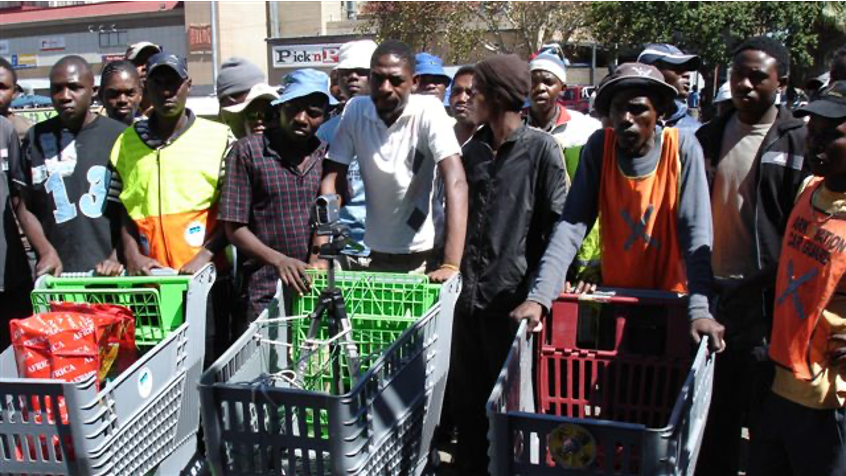
A recent protest action against the criminalization of trolley pushing in Joubert Park, demonstrated that the trolley pushers are united against police harassment. During the protest, trolley pushers addressed members of the police force and highlighted the fact that they were creating jobs and were not mere criminals. Despite their common stance against the criminalization of the activity, not all trolley pushers are in favor of a representative trolley association body. Trolley pushers working at established taxi stop areas are particularly reluctant to join a representative trolley association body as they are afraid that formalisation may result in a loss of ‘turf’. Despite this, weekly meetings with the trolley pushers have been organised in aid of interrogating a suitable institutional form.
The Trolleyworks.org project was initiated by Johannesburg-based artist Ismail Farouk as part of the Sylt Quelle Cultural Award for Southern Africa 2008. The cross-disciplinary award, launched by the Foundation Kunst:raum Sylt Quelle and the Goethe-Institut, invited proposals from writers, artists, choreographers, musicians, filmmakers and others in Southern Africa, focusing on practitioners that engage relevant social issues in their work. The first phase of the Trolleyworks project began in December 2008, and is proposed to run until May 2009.