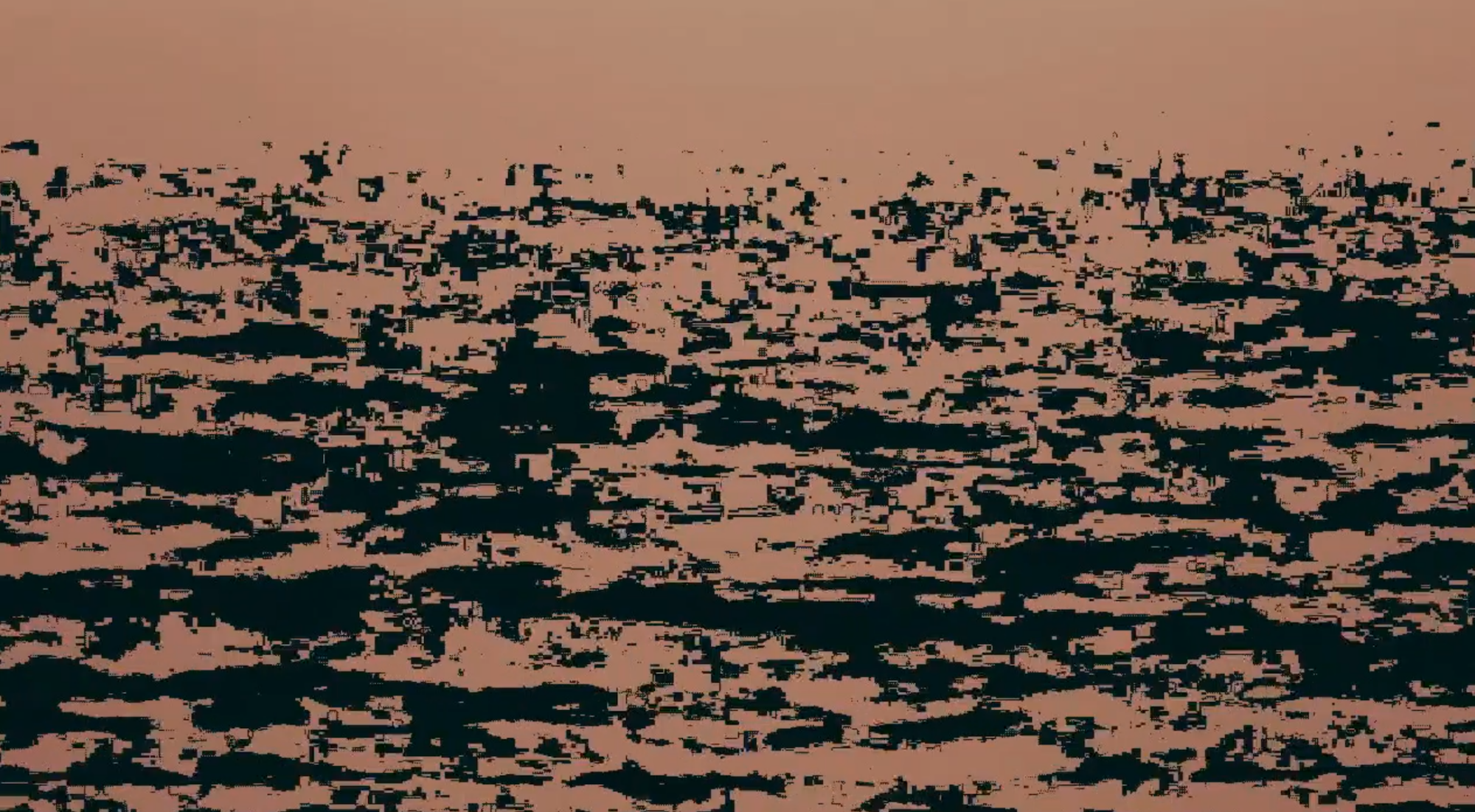
‘Lo que sabe el agua’ (2026) is a video installation, part of a larger body of work that explores the knowledge and guidance of water, seeing water as ancestral futurity, and as a form of counter mapping that refuses colonial border regimes and knowledge systems. Lo que sabe el agua translates as ‘What water knows’ but can also mean, ‘what water tastes like.’
The work is a 4-minute loop that is projected in space, meant to gather bodies in movement, in relation; rooted, but in movement. Inspired by the critical and contestatory work of feminist avant-guard artists and filmmakers as visionaries for seeing water with sovereign eyes, pushing back against filmmaking and artists practice that treats earth, land, water, as background, as inanimate and without history, agency or relationship. Drawing on the radical practices of reassamblage and appropriation developed by artists such as Dara Birnbaum, Trinh T. Minha, and more recently, Arthur Jafa, John Akomfrah, Denise Ferreria da Silva and Arjuna Neumas, among others, myself and artist Nicole Sarmiento, developed a video installation that brings background into foreground. Weaving waters, we splice Pacific shores with Atlantic coasts, deep Indian Ocean Basin with oxbow riverine formations across the Amazon basin.
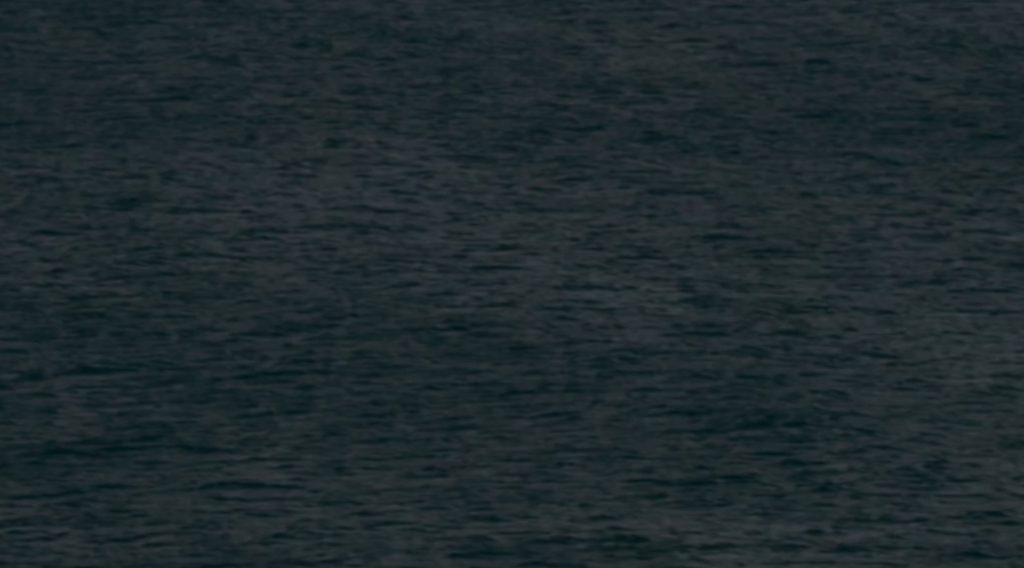
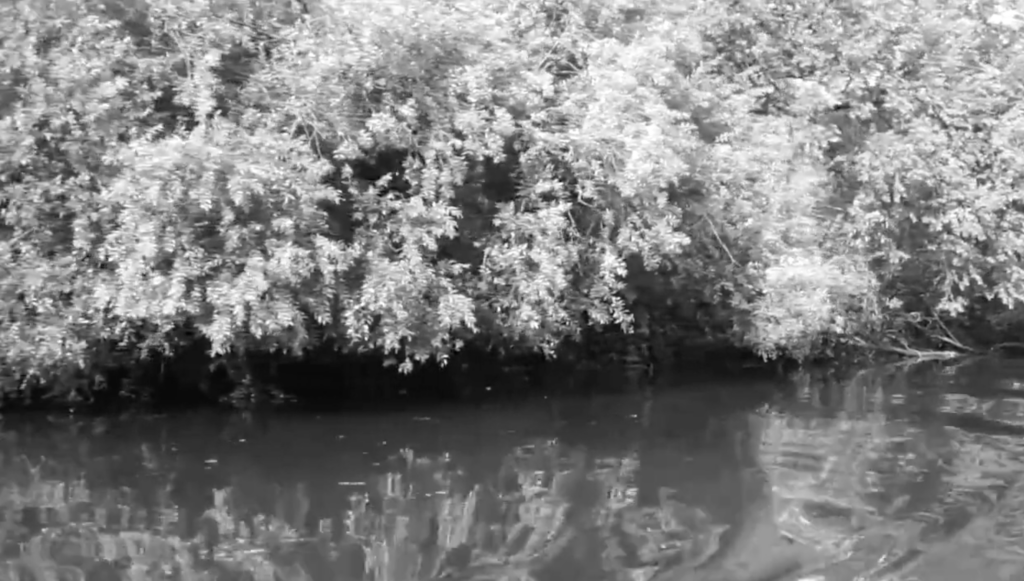
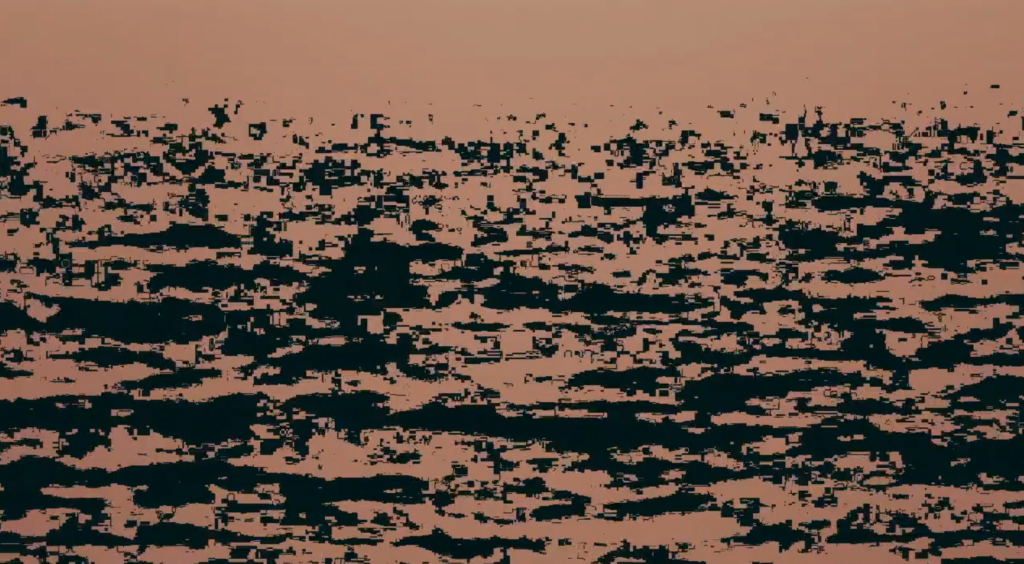
Screenshots from ‘Lo que Sabe el Agua’ (2026), video installation, 4 minutes
Waters refuse borders and naming, hold memory, history and act as witness, guide and teacher, according to Ailton Krenak, Leanne Betasamosake Simpson, and Hugo ka Canham. The work also samples sound from various filmmakers’ works, from Djibril Diop Mambety, to Ciro Guerra, Jeff Barnaby, Chris Marker, Maya Deren, Sara Gomez, among others. Overlaid with sounds of liquid life across space and form, the sound flows in an out and the viewer may not know whether the sound is synchronous with the visuals or not, blurring the sonic experience into the broader spatial arrangements and aural environment. In this way, we experiment with film and sound as performative, relational art forms.
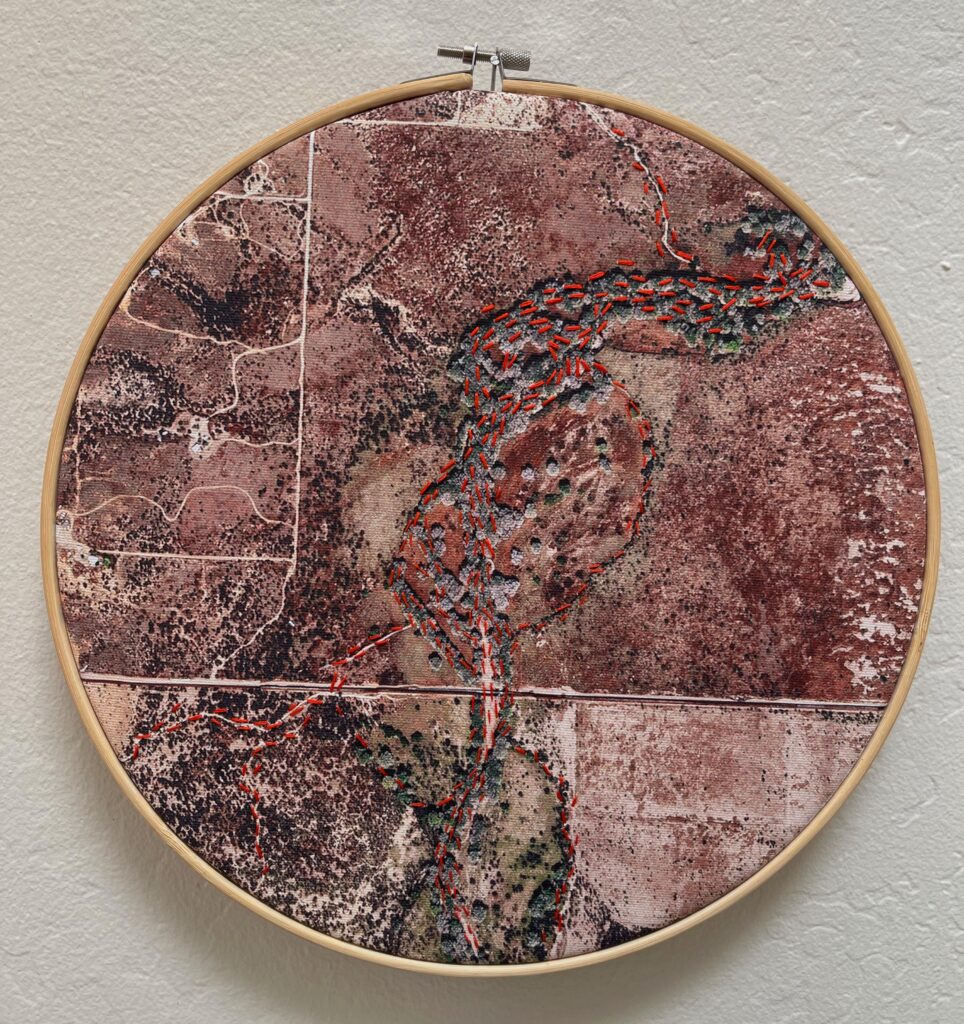
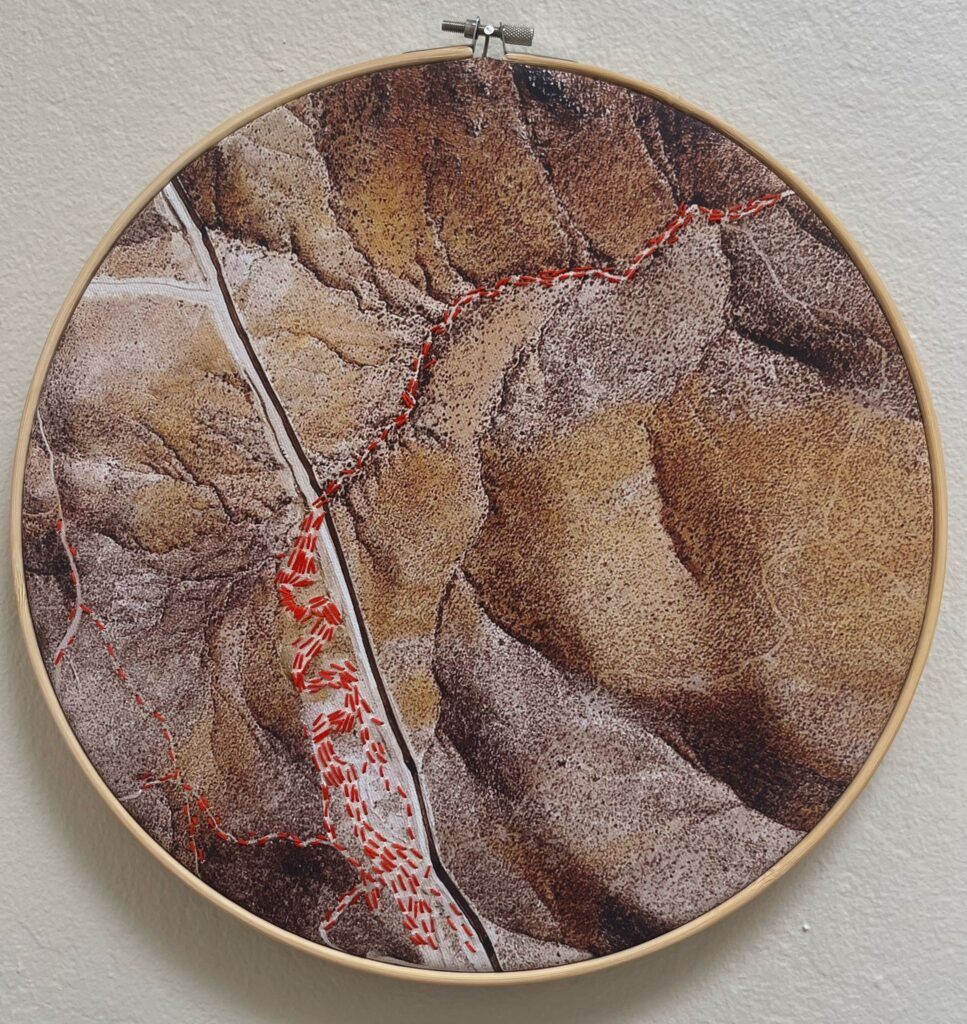
‘Lo que sabe el agua’ video installation exists alongside a series of map-embroideries on canvas, with red cotton thread, set in wooden frames. The maps are the dimensions of small wildlife openings at the US/Mexico border ‘wall’ inserted by the research, activism and long term pressure of wildlife ecologists and cross border biologists who work alongside organizations such as the Wildlands Network and the Sky Island Alliance that work to push back against the violent interruption of cross border ecologies. By refusing the violence infrastructures of bifurcation and division, these scientists suture openings, gaps, into the 9 meter high steel bollard wall. I collaborated with Dr. Sarmiento and the work of the ecologists to locate these openings and ruptures in the colonial map, using Google Earth Pro, ArcGIS and other geographic information systems technologies. We focused on the locations of the wildlife openings and the presence of floodgates, also inserted with the help and activism of ecologists, to allow for seasonal rains and high water events to continue their flow and shaping of the landscape. As prayers to the floodgates and wildlife openings, the map-embroideries and sculptures made to the exact measurements of floodgates (between 7 and 9 ft in height and 5 ft wide, with 8 steel bollard beams), are offerings to the waters’ continued flow and guidance. In 2020, seasonal monsoon rains destroyed huge sections of the US/Mexico border wall, washing broken metal into Mexico. With water as guide to non-colonial futures, our work honours and calls upon entangled relations between human and more than human that exceed the violence of the colonial condition we continue to inhabit. Sarmiento is an artist based in Santa Cruz, California, and I am based in Durban, South Africa, and the body of work allowed for meditative and critical collaboration across waters and histories.
Nicole Sarmiento and Ismail Farouk
Images of map-embroidery panels , part of Lo que sabe el agua (2026) installation, print on canvas,thread, wooden frame.