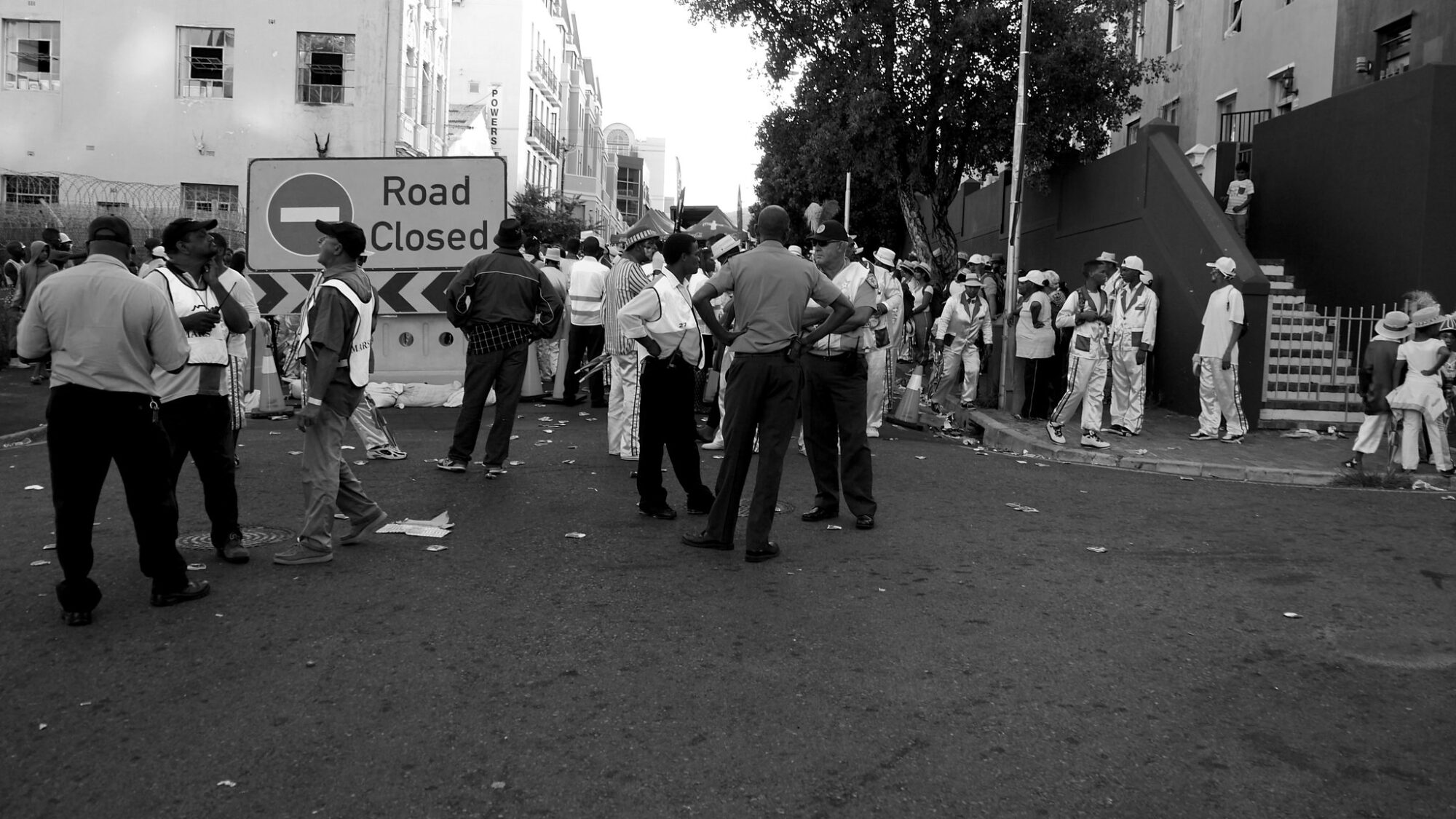
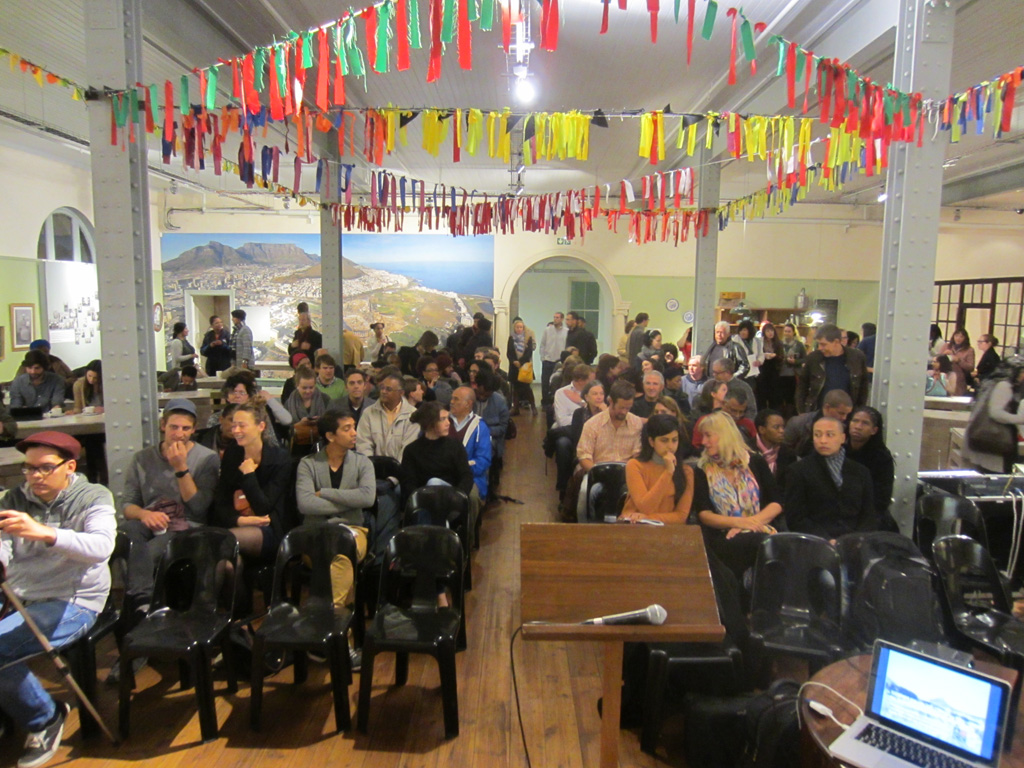
District Six on the Fringe (2013) at the Homecoming Centre. An event by The PublicCulture CityLab at the African Centre for Cities.
The area designated as ‘The Fringe’ is intertwined with District Six and yet that history of the space, with its memory of forced removals, has not figured significantly in the ‘cultural regeneration’ plans for the East City. What place is there for memory and history within culture-led urban development? What risk is there that contemporary stylizations of Cape Town might serve to obliterate local histories and entrench the status quo? What of District Six, not only as symbol and museum, but as marker of the pasts that haunt the present?
Ismail Farouk
Presentation District Six Museum, 2013
Conflicting rationalities: post-apartheid spatial legacies and the creative city
Good evening to everyone joining us tonight. I speak tonight in the capacity of an artist and scholar who is currently employed at the African Centre for Cities. My work as an artist began in the late 90s, as a Fine Art student at Wits University, a university based in Braamfontein.
Before I begin, I would like to offer a caveat with respect to the task of having to limit my talk to the allocated 15 minutes. In the interest of keeping that time and the respect for the other speakers and for the audience, and in order to have ample time for discussion, my presentation will seem a bit disjointed. While I am speaking, as you can see, a set of images will loop on the screen. These images consist of documentation of my own artwork, as well as images I have collected, along with screenshots related to my doctoral research on the East City. I have also included archival images of a historical nature. I will not be talking directly to each slide, but would like to invite you to ask any questions or clarifications related to the images, or to the images in relation to my talk, during the Q&A.
So, returning to Braamfontein. My work as an artist began by documenting the daily rhythms and livelihoods related to the street sellers working on Jorissen Street, which is the main street connecting Braamfontein to the city and an important point of access for pedestrians trying to access the city. Informal traders saw an opportunity here by providing convenience trade to passers-by. Sometime in late 1998, whilst documenting the work of the informal traders, I became aware of the work of the Metro Police who were engaged in criminalizing informal traders as a result of the newly enforced by-law against informal trade. The enforcement of this by-law was a result of a newly instituted corporate regeneration programme for the area. A major part of this institution was the implementation of BIDs, as a new form of urban management.
The work of the Metro Policemen as enforcers of a by-law was then taken up by a private security force that were funded by the business and property owners of the area. This criminalization of the traders came as a shock to me, as an unthinkable act of violence, in what was then part of a new democracy (only a few years into the post- apartheid). What was at stake in Braamfontein were people’s rights to live and work in the city. This was part of my first realization that the laws of apartheid and the by- laws that regulate access to urban areas have not changed.
What was disturbing in Braamfontein, is that the work of criminalization of the poor was seen as part of a larger framework to create an inclusive, beautiful and well managed city. This was part of what was called the Braamfontein Regeneration Project. What I was witnessing was the inscription of the corporate city, which set into motion a new agenda and direction for South African cities; this direction
foregrounded business partnerships in the form of PPPs, middle class values and aesthetics, all at the expense of a deeper grappling with the legacies of the past.
BIDs in Joburg provided a convenient solution for the so-called haphazard densification of the city centre, satisfying the need for active management and regulation of city spaces through partnerships with business. BIDs were able to leverage the necessary resources for the delivery of supplementary services – services that were traditionally provided by municipalities.
These services come attached with particular norms and values, particular kinds of textures and surfaces that promote the perception of a world-class city. This set in motion an interrogation of what was being masked in the promotion of world class- ness and cosmopolitanism.
Achille Mbembe and Sarah Nuttall, in Writing the world from an African metropolis, write of this emerging surface aesthetic in Johannesburg, “the creative éclat of these images and surfaces, functions to override and displace historical memory through quotidian practices and the fantasies of consumption.”
Today at the confluence of the Cape Town Partnership and the District Six Museum, I continue to interrogate what is and has been taking place. What is at stake in Cape Town is no different from what I observed in Johannesburg.
In mid 1999, I left Johannesburg to live in the city of Cape Town and to begin my work at the ACC where I began doctoral work. My concurrent professional responsibilities included the co-convening of a citylab research project, called the Central Citylab, which interrogated the segregated and fragmented nature of the central city of Cape Town. This work problematised the possibility of an increased population of the central city as part of a densification policy aspiration as initially put forward by the CTP. What emerges a few years later is that those densification aspirations do not aim to fundamentally transform the city; rather, they re-entrench inherited class and race structures as well as spatial legacies.
This brings me to the subject of tonight’s discussion. My original research was looking at the East City Design Initiative, which was later re-branded as the Fringe Innovation District. The Fringe is an economic development strategy, developed by the Cape Town Partnership, where design and innovation are seen to play a predominant role in the repositioning of Cape Town’s regional economy.
Analyzing the discursive framing of the Fringe project, my initial work looked at unpacking the broader argument for the establishment of a design-oriented precinct in the East City. This argument can be deconstructed as follows:
The central claim is that Cape Town is in an established position as a hub for creativity and innovation. This claim is qualified by a set of propositions; in this case, the rationa1e is that Cape Town boasts a pre-existing design community and that support for a diversifying service sector in the East City will lead to greater regional economic benefits. This proposal is backed by the successes supposedly experienced in other cities around the world that have implemented similar design-orientated precincts.
The Fringe proposes to alter the built fabric of this part of the city, through the use of urban design and landscaping techniques in the establishment of a design precinct. In the attainment of this vision, the CTP proposes a set of temporary interventions as well as the establishment of partnerships and catalytic projects. The Fringe also operates as a flagship project of World Design Capital 2014. And importantly, the Design Capital 2014 proposes to use design as a tool for social transformation and to deal with structural inequality.
It is not my interest in this presentation to outline the various projects or methods of the Fringe, nor to present positions on successes or failures. The Urban Design Framework for the Fringe is available for download on the Fringe website, and I urge everyone here to read it at your own leisure. What I am interested in, after following this project for some time and building on my previous work, are the underlying set of power dynamics at play, and rather want to ask a set of questions and put forth some provocations for thinking about Cape Town today and for thinking about this present moment – in the context of the Fringe and of what the previous speakers have laid out.
I brought up earlier the question of masking and surfaces in the city of Johannesburg. I want to ask the same questions of Cape Town:
o What is being masked in the making of place and the creation of subjectivities in the name of design?
o What other imaginaries of Cape Town are some of the contemporary stylizations of the city masking?
o What place is there for memory, history and trauma within culture-led urban development?
What I am intimating is that the work I am engaged in speaks to what urban scholar Ananya Roy calls, thinking about the present historical conjuncture. In this moment, the central city remains divorced from the Cape Flats and the sprawling informal settlements both discursively and materially. The discourse of creative cities promotes this segregated imaginary, and the current branding of the city maintains the status quo of the central city as divorced from the rest of Cape Town. When the notion of “world class” is being used, it is not with reference to Bonteheuwel.
Moreover, within this imagineering, the lives of those who were displaced from the central city and who are the descendants of the displaced, are seemingly divorced from the lives of those who live, work and derive pleasure from the central city. I want to propose that one cannot think the city today, one cannot think about transformation, creativity or design without grappling with the deep imbrication of those supposedly separated spaces as intimately intertwined. Naming is an important exercise of power, and in re-naming and branding the area as the Fringe, what is being severed is a deep connection of people whose lives are marked by dispossession and forced removal to questions of memory, heritage and more broadly land. Why is it problematic for returning land claimants to re-settle in the Fringe as opposed to District Six?
This is not simply about a question of naming. What I am arguing for is a need to broaden our spatial imaginaries, and that such a broadening would have to include taking on questions of both colonial and apartheid legacies. Memory and history is thus about the present moment, about the way in which historical injustices are re- capitulated in forms of everyday contemporary social injustice.
Edgar Pieterse at the Thinking the City series of discussions that was part of Infecting the City this year asked the question, “does the tagline of design for social transformation go far enough?” He followed this question with a provocation which suggested that the institutional is the central design question. He suggested the possibility that design allows for thinking in imaginative ways to both imagine and create institutions that can facilitate transformation. So the provocation I would like to put forth is: does the Fringe concept provide an effective institutional framework to take on the task of transformation?
Creative cities discourse is backed by the supposed economic benefits experienced in cities elsewhere; popular examples cited include Barcelona, Toronto and Bogota. As much as there is great value in transnational policy transfer and cross-fertilization, the specific local context of place and history, as well as the activities, cultures, sensibilities and creativities of working classes need to take precedent over ideas that are seemingly helicoptered from elsewhere.
Cape Town exists in a complex relationship to the global, and contemporary stylizations of the city are a result of neoliberal practices that promote economic competitiveness and profit as the norm; it promotes subjectivities of consumption over the hard work of building critical subjectivities that are actively involved in the work of transformation. Moreoever, hegemonic discourses construct what is sayable and thinkable within a specific context. We need to ask what is unthinkable within present creative cities discourse?
A number of cities located in the Global South have begun to seriously take on the agenda of constructing alternatives to the neoliberal orthodoxy, of radical transformation that involve questions of deep time and of the impacts of historical injustice. There has been a period of massive social transformation across the southern Americas, from Bolivia to Ecuador and Venezuela, that have impacted the globe and not less global power dynamics – yet these examples never seem to make it into the list of examples of success stories. I want to argue that this is part of understanding what is constructed as thinkable and sayable in the politics of the urban today.
I want to end on this question of creative practice and the creative by asking what constitutes the creative and who engages in creative practice? Is it possible to expand the archive? Can we think outside of the framing of creative cities towards an alternative conceptualization? Is it possible to think about the creative and the contemporary without re-thinking the concept of time? How do contemporary stylizations of Cape Town serve to erase local histories, with the effect of re- entrenching historical injustice in the present?
What of the informal economy that circulates in all our cities? Let us not forget the women food vendors who were evicted from the rooftop of the central station and of the thousands of people who depended on them as bread-winners?
Our urban and rural spaces are teeming with creative approaches to socio-spatial, economic and cultural creativity – often emerging out of everyday practices.
What of the transformative kernel within that which is constructed as liminal within the contemporary city?